Databricks

Databricks integration
Sync data between Databricks and your SaaS tools. Use your lakehouse as a source for activating data, or as a destination for consolidating records from every tool.
Activate data with the Databricks integration
Push Databricks tables to SaaS tools or consolidate tool data in one place.
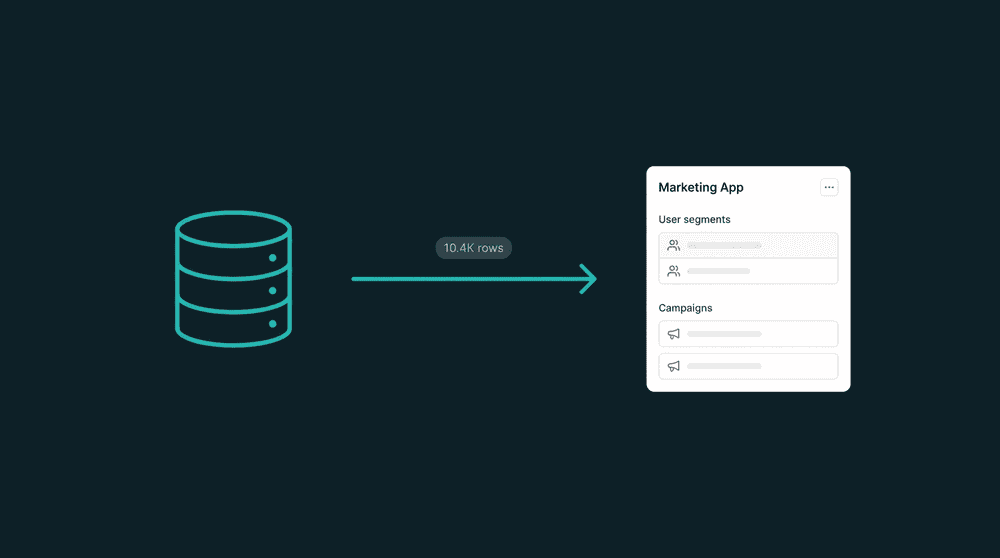
Reverse ETL, built in
Push modeled data from any Databricks table directly to your CRM, marketing, or support tools. No separate reverse ETL product needed. Oneprofile handles it.


Popular integrations with
Databricks
Connect
Databricks
to these tools for powerful data workflows

CRM
Push modeled customer data from Databricks to HubSpot contacts for sales context without reverse ETL tooling.
Databricks
+
HubSpot
CRM
Sync computed account scores and usage metrics from Databricks into Salesforce for revenue teams.
Databricks
+
Salesforce

Customer Support
Enrich Intercom conversations with product usage data stored in Databricks tables.
Databricks
+
Intercom

Payments
Consolidate Stripe billing events into Databricks for revenue analytics and churn modeling.
Databricks
+
Stripe

Analytics
Mirror PostHog product analytics into Databricks for SQL-based cohort analysis.
Databricks
+
PostHog

Database
Consolidate Stripe billing data into PostgreSQL for custom reporting and SQL-based dashboards.
Databricks
+
PostgreSQL
View All Integrations
Connect the tools you already use
Oneprofile supports wide range of integrations across categories
HubSpot
CRM
Salesforce
CRM

Attio
CRM
Stripe
Payments
Intercom
Customer Support
PostHog
Analytics

Mixpanel
Analytics
PostgreSQL
Database

MongoDB
Database

Braze

ActiveCampaign

SendGrid

Iterable

Shopify
E-commerce

Gainsight
Analytics

Planhat
Analytics

Vitally
Analytics

Marketo

Facebook Ads
Advertising

Recharge
Payments
View All Integrations
About
Databricks
Oneprofile is not just about sending data from one tool to another. It ensures customer profiles and events stay consistent across every system, even as data changes over time.
SUPPORTED RECORDS
Any Table
Any Column
INTEGRATION TYPE
Source
Destination
CATEGORY
Data Warehouse
Analytics
FAQ
How does Oneprofile connect to Databricks?
Can I sync any Databricks table, or only specific ones?
Does the Databricks integration support Delta Lake tables?
Can I use Databricks as both a source and destination?
How does incremental sync work with Databricks?
Is the Databricks integration available on the free plan?