Airbyte vs Fivetran: open-source or managed ELT?
Data Integration
Airbyte vs Fivetran: open-source or managed ELT?
The canonical data integration tradeoff: open-source control vs. managed convenience. Both require a warehouse.
What Airbyte and Fivetran do as data integration tools
Both platforms extract data from sources and load it into cloud warehouses. They differ in how much control you get over the pipeline and what it costs.

Airbyte
Airbyte is an open-source data integration platform founded in 2020. It extracts data from SaaS apps, databases, and files, then loads it into warehouses or databases. The platform can run as a cloud service or be self-hosted on your own infrastructure, giving engineering teams direct control over how data moves through their stack.

Fivetran
Fivetran is a fully managed ELT platform founded in 2012. It connects data sources to cloud warehouses with minimal configuration, handling extraction, schema management, and loading. It grew through acquisitions including HVR for CDC and Census in 2025 (now Fivetran Activations) for reverse ETL, and completed its merger with dbt Labs on June 1, 2026. It targets managed-infrastructure teams.
Airbyte vs Fivetran feature and pricing comparison
How they compare on deployment, connectors, pricing, latency, and the architectural choices that affect your stack.
Airbyte
Fivetran
Primary approach
Open-source ELT with self-hosted and cloud options
Fully managed cloud ELT with optional self-hosted HVR
Connector count
600+ connectors across Certified and Community tiers
500+ total (300+ standard, 450+ Lite API connectors)
Deployment options
Self-hosted, cloud, or hybrid on one codebase
Cloud SaaS, hybrid, self-hosted HVR (separate product)
Set up time
$10/GB database, $15/M rows API. Volume discounts available.
Monthly Active Rows (MAR). Per-connector billing since March 2025.
Pricing model
1 hour on Cloud, 5 minutes self-hosted
15 min Standard, 1 min Business Critical (2x+ cost)
Minimum sync latency
Batch only. No native streaming support.
Batch only on SaaS. Real-time requires self-hosted HVR.
Transformation support
dbt Cloud integration. No in-flight transforms.
dbt Cloud integration. No in-flight transforms.
Open source
Yes. Full self-hosted deployment with source code access.
No. Proprietary closed-source platform.
Warehouse requirement
Yes. Loads into warehouses or databases.
Yes. Loads into cloud warehouses.
Reverse ETL
Not built in. Requires a separate tool.
Fivetran Activations (Census, acquired 2025) adds reverse ETL.
Strengths and limitations
Airbyte
Fivetran
Open-source and self-hostable
Full source code access means you can deploy on your infrastructure, audit the codebase, and avoid vendor lock-in. Self-hosting removes cloud latency limits and gives you 5-minute sync intervals.
Fully managed, no infrastructure
Connect a source, pick a warehouse, and Fivetran handles extraction, schema management, and loading. No servers, no upgrades, no worker sizing. The platform runs without engineering intervention.
Lower cost at scale
Volume-based pricing at $10/GB for databases is straightforward to budget. The open-source edition runs free on your infrastructure, making it one of the cheapest options for large data volumes.
Mature, maintained connectors
300+ standard connectors built and maintained by Fivetran with automatic schema evolution. Connectors are production-tested at scale and kept current as source APIs change.
Custom connector development kit
The CDK and AI-assisted builder let teams create connectors for niche sources in hours. The open-source community has contributed hundreds of additional connectors beyond the core set.
Strong transformation ecosystem
Native support for dbt Core, dbt Cloud, and Coalesce. Transformation workflows run automatically after data loads, giving data teams a complete extract-load-transform pipeline in one platform.
Variable connector quality
Airbyte splits its 600+ connectors into Certified and Community tiers. Community connectors vary in reliability, docs, and update frequency. Test any connector you depend on before committing.
Unpredictable MAR-based pricing
Monthly Active Rows are counted using Fivetran's internal representation, not yours. Non-relational data gets normalized into extra rows, and per-connector billing since 2025 removed bulk discounts.
Self-hosting operational burden
Running Airbyte yourself means managing upgrades, worker sizing, and infrastructure. Cloud removes this overhead but limits sync to hourly intervals and one source at a time.
Batch-only on cloud SaaS
Standard latency is 15 minutes. Sub-minute sync requires Business Critical tier at 2x+ cost. Real-time streaming needs self-hosted HVR, a separate product with about 30 supported sources.
Our Suggestions
Choose Airbyte if you need open-source control, self-hosting flexibility, and lower costs at high data volumes.
Choose Fivetran if you want fully managed ELT with minimal engineering overhead and mature, maintained connectors.
Neither one of them feels right to you?
If you just need your SaaS tools sharing data — warehouse optional — Oneprofile syncs tools directly with published pricing and no batch pipeline to manage.
How Oneprofile fills that gap
Direct tool-to-tool sync with published pricing at every tier, self-serve signup, and warehouse optional. Most teams are live in minutes.
Difference 1
Warehouse optional
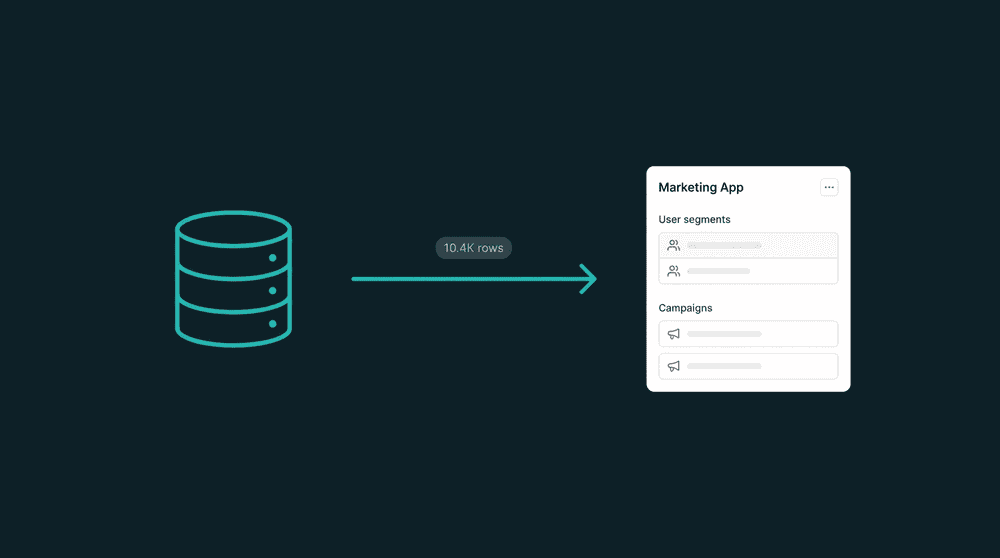
Airbyte and Fivetran both load data into a warehouse. Getting it back into your CRM or support tool requires a separate reverse ETL step. Oneprofile works with or without a warehouse. Connect your database or any SaaS tool, map fields to any destination, and data syncs on your schedule. No warehouse compute costs, no dbt models, no second pipeline to push data back out.

Difference 2
Published pricing at every tier
Airbyte's volume pricing requires estimating data moved per month. Fivetran's MAR model has surprised teams with bills 5x their projections. Oneprofile publishes every plan on the website: free to start, $100/mo Team, $2,000/mo Enterprise. Pay through Stripe checkout. No consumption credits, no sales conversations, no invoices that arrive higher than expected.
Difference 3
Bidirectional sync by default
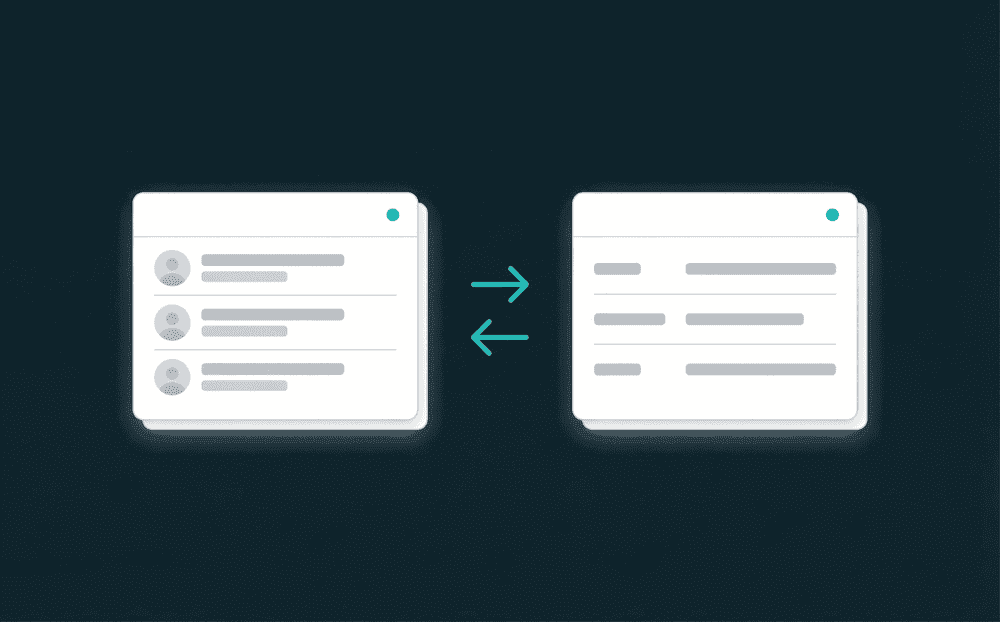
Every Oneprofile connector reads and writes. Sync your database to HubSpot and HubSpot back to your database with the same integration. Airbyte and Fivetran separate sources from destinations into different connector types. Moving data in both directions means building and maintaining two pipelines instead of one.
Is Airbyte or Fivetran better for small teams?
How does Airbyte vs Fivetran pricing compare at scale?
Can I use Airbyte or Fivetran without a data warehouse?
Does Fivetran support real-time data streaming?
What are the main risks of self-hosting Airbyte?