Talend vs Informatica: which ETL fits your team?
ETL Comparison
Talend vs Informatica: which ETL fits your team?
Two enterprise ETL heavyweights owned by Qlik and Salesforce. Neither publishes pricing. Both require data engineers.
What Informatica and Talend do as data integration platforms
Enterprise data integration with 20+ years of history. They differ in scope: Informatica is a data management suite, Talend focuses on ETL and quality.

Informatica
Informatica started as an ETL vendor in 1993 with PowerCenter, now its legacy on-premises product, and grew into the broadest enterprise data management platform on the market. The product line spans integration, quality, governance, MDM, and cloud services. Salesforce closed its acquisition of the company on November 18, 2025, folding it into the Salesforce Data Cloud ecosystem.

Talend
Talend launched in 2005 as an open-source ETL tool and expanded into data quality and governance through its Data Fabric platform. Qlik acquired the company in 2023, then discontinued Talend Open Studio in 2024, ending the free edition that built the community. Talend Data Fabric now operates as part of Qlik's broader data integration and analytics portfolio.
Talend vs Informatica feature and pricing comparison
How they compare on deployment, connectors, pricing, transformations, and the choices that affect your stack.
Informatica
Talend
Primary approach
Full data management suite: integration, quality, governance, MDM
ETL platform with data quality and governance (Qlik-owned)
Connector count
300+ enterprise connectors, including on-premises and mainframe
50+ managed connectors; 1,000+ API-based connections claimed
Deployment options
On-premises, private cloud, public cloud (managed data plane)
On-premises (self-hosted), private cloud, public cloud
Set up time
Opaque 'Informatica Pricing Units.' Requires a sales quote.
Opaque tiered pricing based on volume, jobs, and duration.
Pricing model
CDC via PowerExchange, Kafka integration, sub-second latency
CDC and streaming supported, but limited scale in real-time mode
Real-time support
Rich visual ETL via PowerCenter, pushdown optimization, dbt
tMap visual transformations, SQL functions, dbt support
Learning curve
Steep. Requires trained data engineers and weeks of onboarding.
Steep. Requires trained data engineers and weeks of onboarding.
Open-source option
No. Proprietary closed-source platform.
Discontinued. Qlik killed Talend Open Studio in 2024.
Built-in data quality
Profiling, cleansing, and master data management included
Profiling and cleansing via Data Fabric
Parent company
Now part of Salesforce (merger closed Nov 2025). Data Cloud ecosystem.
Acquired by Qlik (2023). Analytics and BI ecosystem.
Strengths and limitations
Informatica
Talend
Broadest enterprise data management suite
More than ETL. The platform spans integration, quality, governance, and master data management in one product line. If your needs grow beyond data movement, the tooling is already there.
Rich ETL transformation capabilities
Data Fabric's visual mapping, data quality checks, and transformation logic handle complex pipelines. If your use case requires heavy transformation before loading, the tooling is mature.
300+ proven enterprise connectors
Connectors cover on-premises databases, mainframes, cloud warehouses, and SaaS apps. Most are battle-tested at Fortune 500 scale with built-in schema evolution support.
Real-time and batch in one platform
Supports streaming CDC alongside traditional batch processing. Most competing ETL tools are batch-only, making Talend a reasonable choice when you need both modes without a second tool.
Private cloud and hybrid deployment
One of the few vendors offering a managed private data plane. You get SaaS convenience with data residency control, which matters in regulated industries with strict compliance needs.
Built-in data quality and governance
Data Fabric includes profiling, cleansing, and governance alongside integration. Teams that need to validate and clean data before loading can handle it within the same platform.
Opaque, expensive pricing
Pricing uses 'Informatica Pricing Units' and requires a sales quote. Cloud costs are hourly per compute unit, with separate row-based CDC pricing. Expect to pay more than most alternatives.
Open-source edition killed by Qlik
Qlik discontinued Talend Open Studio in 2024, removing the free option that built the community. Teams that relied on it must now pay for Qlik licensing or migrate to a different platform.
Steep learning curve for smaller teams
The platform assumes a dedicated data engineering team. Even Informatica Cloud, the simpler option, takes weeks to learn for teams without prior Informatica experience.
Opaque pricing with tier-based limits
Pricing requires a sales quote. Lower tiers may lack features like CDC, and costs scale with data volume, job count, and duration. Budgeting without a clear pricing page is difficult.
Our Suggestions
Choose Informatica if you need the broadest enterprise data management suite with governance, data quality, and private cloud deployment at scale.
Choose Talend if you need rich ETL transformations and built-in data quality inside one platform, and your team can handle the learning curve.
Neither one of them feels right to you?
If you just need your SaaS tools sharing data without enterprise ETL infrastructure, Oneprofile syncs tools directly with published pricing. Warehouse optional.
How Oneprofile fills that gap
Direct tool-to-tool sync with published pricing, self-serve signup, and warehouse optional. Most teams are live in minutes, not months.
Difference 1
Warehouse optional, no data engineer required
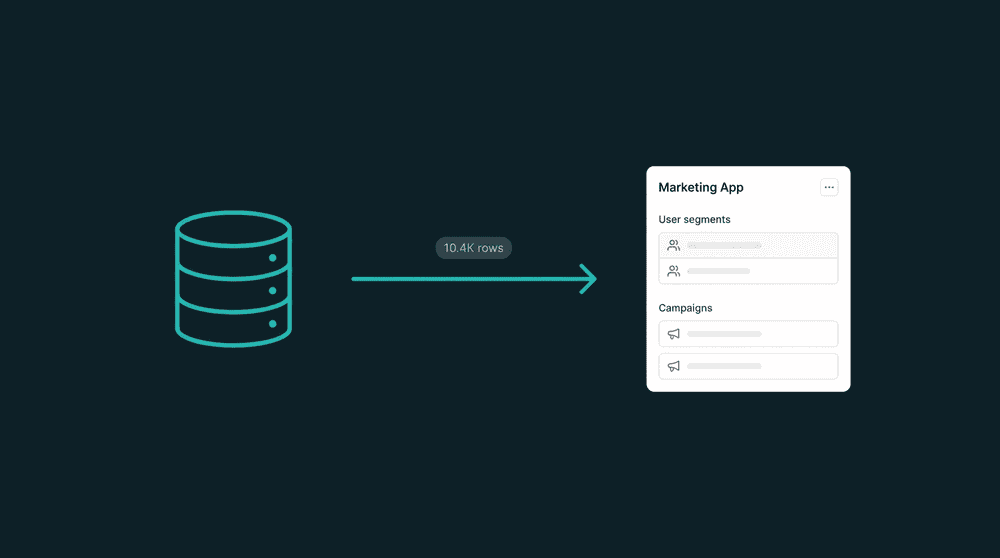
Both Informatica and Talend assume you have a warehouse and a data engineer to run the pipeline. Oneprofile works with or without a warehouse and needs no data engineer. Connect your Postgres database or any SaaS tool, map fields to any destination, and data syncs on your schedule. No compute units, no job configs, no pipeline monitoring. A single ops person or founder can run it.
Difference 2
Published pricing at every tier
Informatica charges by compute units. Talend gates features behind sales conversations. Both require a quote to know what you'll pay. Oneprofile publishes every plan on the website: free to start, $100/mo Team, $2,000/mo Enterprise. Pay through Stripe checkout. No procurement process, no license negotiations, no surprise invoices.
Difference 3
Bidirectional sync by default
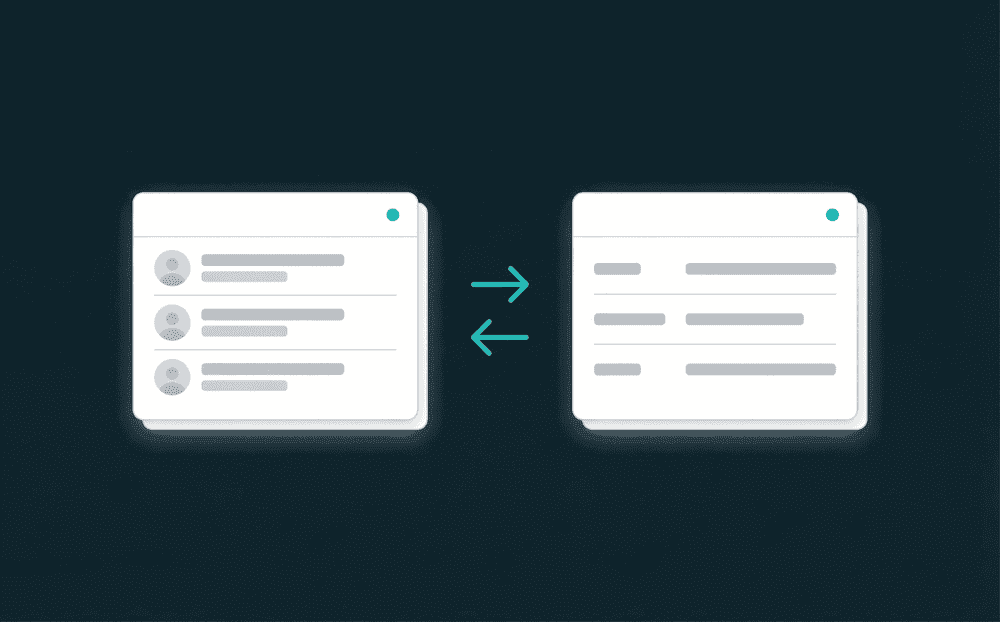
Enterprise ETL pipelines move data in one direction: extract from source, transform, load to warehouse. Getting data back to operational tools means building a second pipeline. Every Oneprofile connector reads and writes. Sync your database to HubSpot and HubSpot back to your database with the same integration. One setup, both directions.
Do I need a data engineer to use Informatica or Talend?
Is Talend still open source after the Qlik acquisition?
How does talend vs informatica pricing compare?
Can I use Informatica or Talend without a data warehouse?
What happened to Talend after Qlik acquired it?