Segment vs mParticle: which CDP fits your team?
CDP Comparison
Segment vs mParticle: which CDP fits your team?
Segment leads in event collection. mParticle leads in mobile SDKs. Both require SDK setup and hide pricing.
What Segment and mParticle do
Both platforms collect customer events, resolve identities across devices, and route unified profiles to downstream marketing and analytics tools.

Segment
Segment is a customer data platform owned by Twilio. It captures user behavior through client-side and server-side SDKs, stitches identities across devices, and fans that data out to downstream tools. Segment is one of the most widely adopted CDPs, particularly among mid-market and enterprise engineering teams that already have tracking infrastructure in place.

mParticle
mParticle, now mParticle by Rokt after Rokt acquired it in early 2025, is a customer data platform purpose-built for mobile-first companies. It grew out of the need for reliable event collection on iOS and Android, and expanded into identity resolution and audience management. The platform is used primarily by large enterprise brands in retail, media, and financial services.
Feature-by-feature comparison
Side-by-side on the capabilities that matter when choosing between these two CDPs.
Segment
mParticle
Primary focus
Event collection and routing to 700+ destinations
Mobile SDK instrumentation and audience management
Identity resolution
Yes (Segment Unify, deterministic)
Yes (IDSync, deterministic + probabilistic matching)
Integration count
700+ destinations, 450+ sources
300+ integrations
Set up time
Client-side JS, server-side SDKs, Protocols schema validation
Native mobile SDKs, web SDK, server-to-server APIs
Data collection method
Engage add-on with separate pricing
Built-in audience management with real-time segmentation
Audience building
Free tier published. Paid tiers require a sales call.
No public pricing at any tier. Contact sales for all plans.
Self-serve signup
Free tier only. Paid plans require sales.
Free tier only. Paid plans require sales.
Time to deploy
Weeks. SDK instrumentation plus tracking plan design.
Weeks. Mobile SDK integration plus schema planning.
Warehouse support
Yes. Warehouses as destinations, plus Unify on warehouse.
Yes. Data forwarding to warehouses.
Target company size
Mid-market to enterprise
Enterprise (Fortune 500 focus)
Strengths and limitations
Segment
mParticle
Largest integration ecosystem
700+ total integrations across sources and destinations. If you rely on niche SaaS tools, Segment likely has a pre-built connector ready to go.
Top-tier mobile SDKs
Native iOS and Android SDKs are lightweight and battle-tested at enterprise scale. For mobile-first companies, the SDK quality is a genuine advantage.
Strong developer documentation
Tracking plans, Protocols validation, and per-destination docs are thorough. Developer onboarding is well-supported with clear API references.
Built-in audience management
Audience segmentation ships with the core product. Real-time computation, rule-based segments, and activation are all included — not an add-on.
Free tier for small teams
The free tier (1,000 MTUs, 2 sources) lets small teams collect events without a sales conversation. Few CDPs offer any self-serve entry point.
Configurable identity resolution
IDSync supports deterministic and probabilistic matching with configurable priority rules for complex cross-device user journeys.
Opaque paid pricing
Team and Business plan pricing requires contacting sales. MTU-based billing penalizes anonymous traffic and costs can spike unpredictably.
No public pricing or self-serve
Every plan requires a sales conversation and contract negotiation. No free tier, no self-serve signup, no published pricing at any level.
SDK instrumentation overhead
Getting data in requires installing SDKs and maintaining a tracking plan. Every new event type needs schema definition, validation, and QA.
Enterprise-only positioning
Targets Fortune 500 brands in retail, media, and financial services. Teams under 200 people rarely have the budget to justify the platform.
Our Suggestions
Choose Segment if you need the largest integration ecosystem and a free tier to start.
Choose mParticle if you need mobile-first audience management at enterprise scale.
Neither one of them feels right to you?
For teams that just need their tools sharing the same customer data without SDK instrumentation or sales cycles, Oneprofile is a simpler, more transparent choice.
How Oneprofile fills that gap
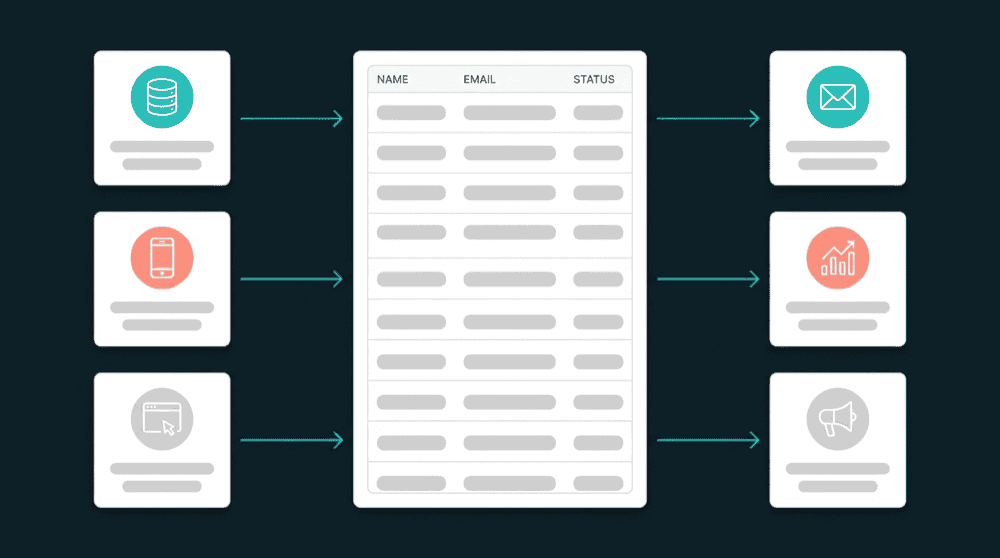
You get tool-to-tool sync with API-key authentication, published pricing at every tier, and self-serve signup. Most teams are live on day one.
Difference 1
No SDK, no tracking plan
Oneprofile connects to your tools via API keys. No client-side instrumentation, no schema design, no engineering sprint to get started. Authenticate, map fields, and data flows.
Difference 2
Published pricing, self-serve signup
Free tier, $100/mo Team, $2,000/mo Enterprise. All published on the website. Sign up and pay via Stripe. No sales call required at any tier.
Difference 3
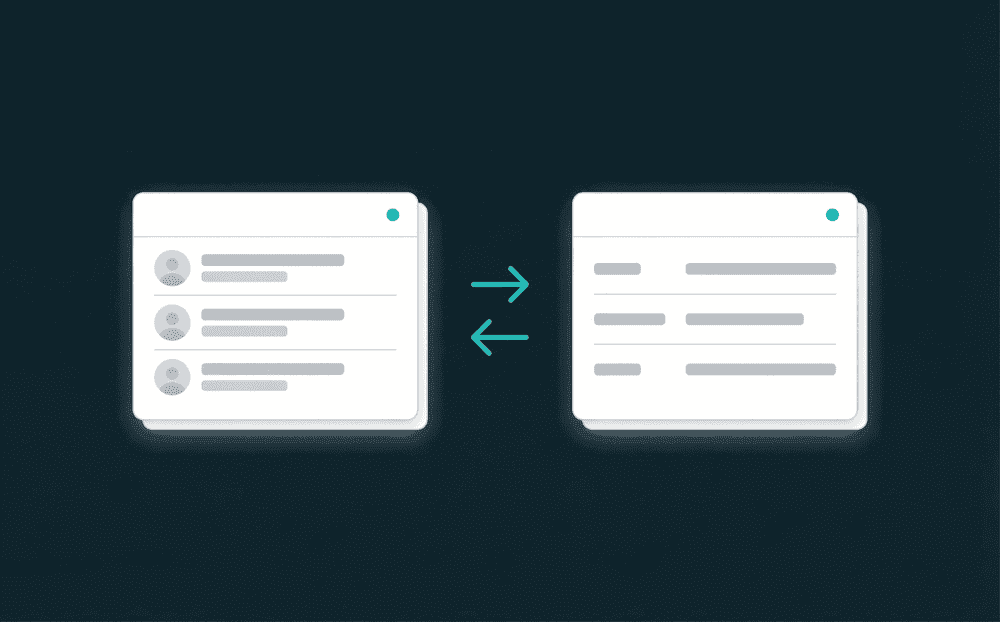
Bidirectional sync by default
Every Oneprofile connector reads and writes. Sync your database to HubSpot and HubSpot back to your database with the same integration. One connector, both directions.
Is Segment or mParticle better for small teams?
Do I need a CDP to keep my tools in sync?
Can I migrate from Segment to mParticle?
What does Oneprofile lack compared to Segment and mParticle?
How does Segment vs mParticle pricing compare?