Predictive marketing without ML
Predictive marketing without ML
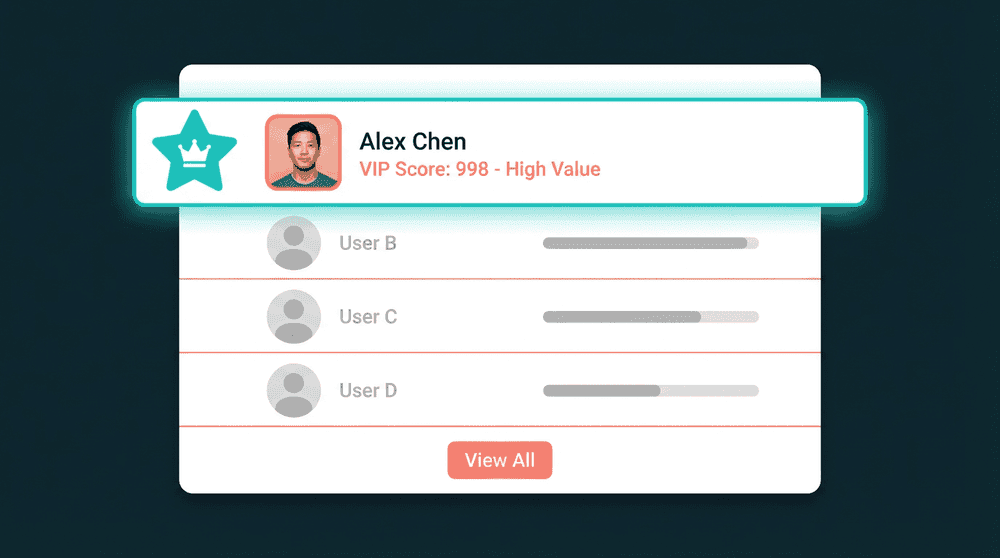
Identify at-risk accounts, spot upsell opportunities, and time campaigns better. You don't need ML models or data scientists. You need your tools to share customer data.
No credit card required
Free 100k syncs every month
What predictive marketing costs most teams today
Enterprise CDPs and AI platforms promise predictive behavior marketing. They require warehouses, ML engineers, and six-figure budgets. Most teams never get past the setup phase.

AI platforms that assume you have a data team
Every ai marketing platform starts with 'connect your warehouse.' If you don't run Snowflake or BigQuery, and your team doesn't write SQL, you're blocked before any prediction happens.

Signals scattered across disconnected tools
Billing status is in Stripe, support history in Intercom, product usage in your database. The data for predicting customer behavior already exists. It just doesn't reach your CRM or email tool.

6-month implementations before a single prediction
Enterprise platforms require months of setup: schema design, identity resolution, model training. By the time you're live, your marketing team has already built workarounds in spreadsheets.
Billing data as a churn signal
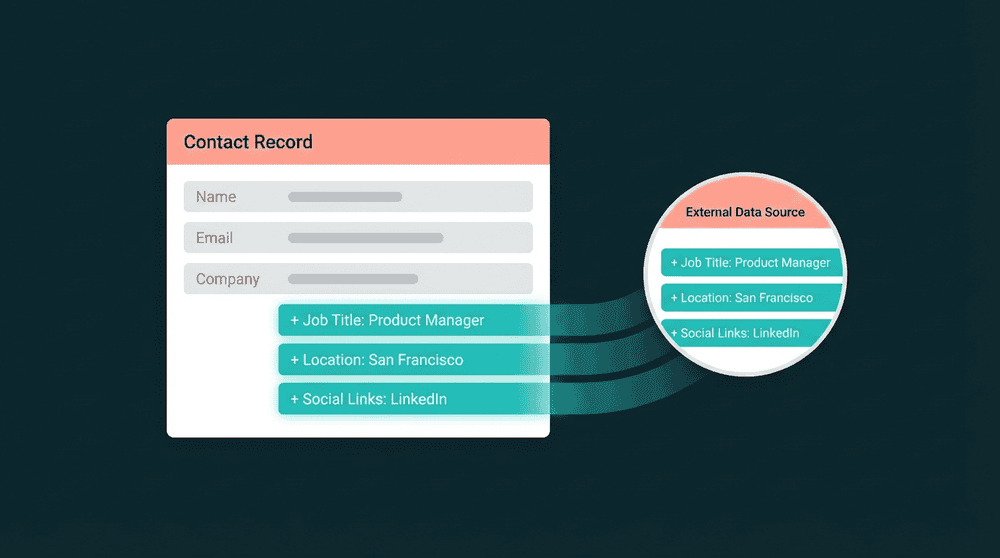
Sync Stripe subscription_status, failed_payments, and plan_changes to your CRM. When a customer downgrades or misses a payment, your marketing tool knows before anyone checks Stripe.
Billing data as a churn signal
Sync Stripe subscription_status, failed_payments, and plan_changes to your CRM. When a customer downgrades or misses a payment, your marketing tool knows before anyone checks Stripe.

Product usage patterns predict expansion
Push last_login, features_activated, and session_count from your database or analytics tool. Customers using 3+ features daily are expansion candidates. Your CRM can score them automatically.

Always-current data on your schedule
Set 15-minute sync intervals. Each run pushes only changed fields. Your predictive signals stay current without batch exports, manual CSV pulls, or stale warehouse refreshes.

Warehouse optional. No SQL, no ML pipeline
Connect tools with API keys, map fields, and data flows. Oneprofile handles retries, creates custom properties in your destination automatically, and tracks every field-level change.
Predictive marketing signal examples
See how teams connect billing, support, analytics, and product tools to surface predictive signals in their CRM and marketing platforms.


Sync subscription downgrades and failed payments to HubSpot contacts. Your retention team sees churn risk before the customer cancels.
Stripe
+
HubSpot

Push open ticket count and recent conversation data to Salesforce. A support spike flags at-risk accounts in your CRM scoring automatically.
Intercom
+
Salesforce


Send feature adoption depth and last login to Attio contacts. Identify expansion-ready accounts by product engagement, not guesswork.
PostHog
+
Attio

Sync billing tier and renewal date to Mailchimp. Time upgrade campaigns to land before renewal, when customers are actually weighing options.
Stripe
+
Mailchimp

Push engagement scores and session frequency to HubSpot. Score leads by actual product usage instead of demographic fit alone.
Mixpanel
+
HubSpot

Sync app-level signals from your database to Salesforce for account health scoring: active users, storage consumed, API calls made.
PostgreSQL
+
Salesforce
View All Integrations
Connect your tools
Oneprofile supports wide range of integrations across categories

ActiveCampaign

Amplitude
Analytics
Attio
CRM

Close
CRM

Customer.io
HubSpot
CRM
Intercom
Customer Support
Mailchimp
Mixpanel
Analytics

Pipedrive
CRM
PostgreSQL
Database
PostHog
Analytics
Salesforce
CRM
Stripe
Payments

Zendesk
Customer Support
View All Integrations
How predictive marketing with connected data works
Connect the tools that hold predictive signals, map the fields, and act on real data instead of guesses.
Step 1
Connect your data sources and destinations
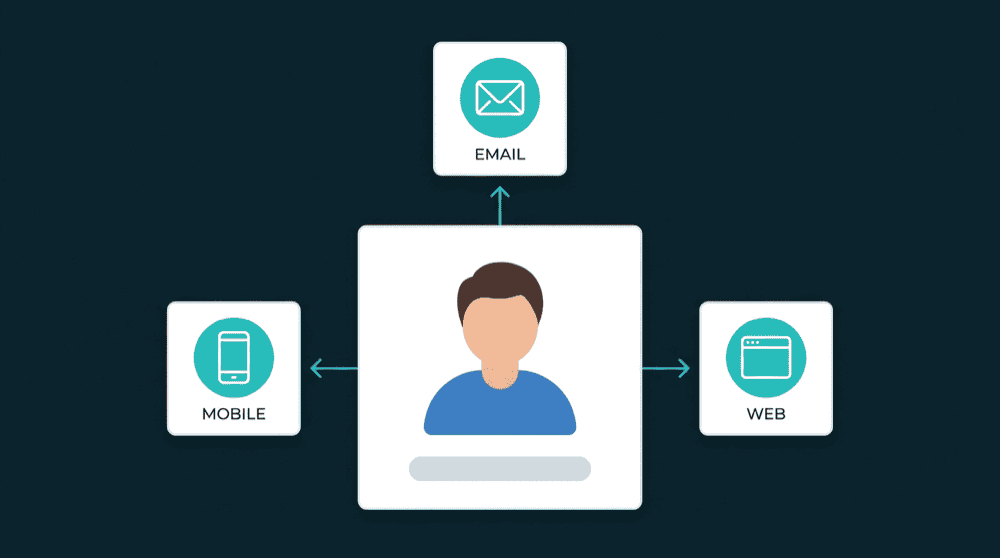
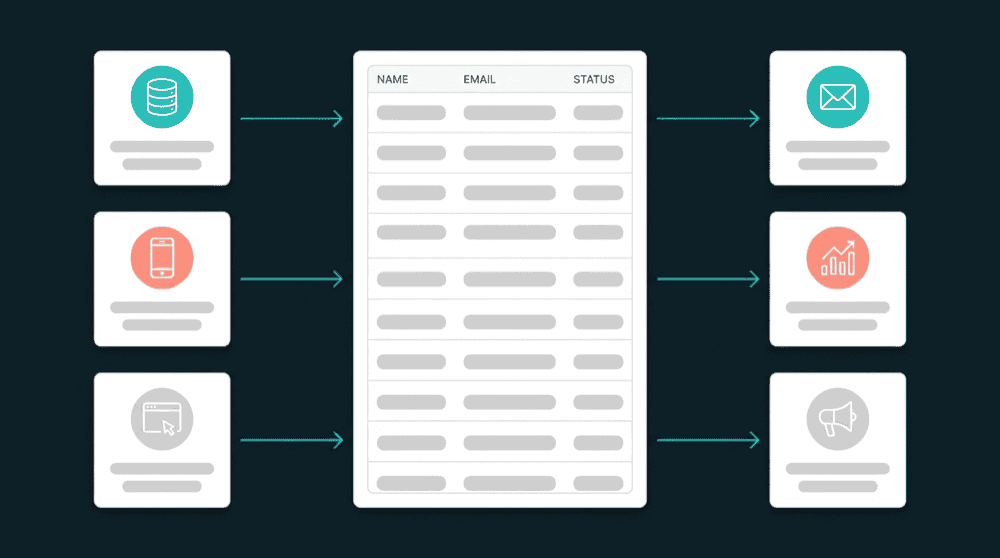
Authenticate Stripe, Intercom, PostHog, your database, and your CRM or email tool with API keys. Oneprofile validates each credential against the live API before saving.
Step 2
Choose which signals to sync
Pick the fields that predict behavior: subscription_status, open_ticket_count, last_login_date, features_activated, payment_failures. Map them to destination contact properties.
Step 3
Set sync behavior and schedule
Choose Update or Create mode and set a 15-minute schedule. Oneprofile pushes only changed fields. The first sync backfills all historical records so your data is complete from day one.
Step 4
Build scoring rules in your CRM
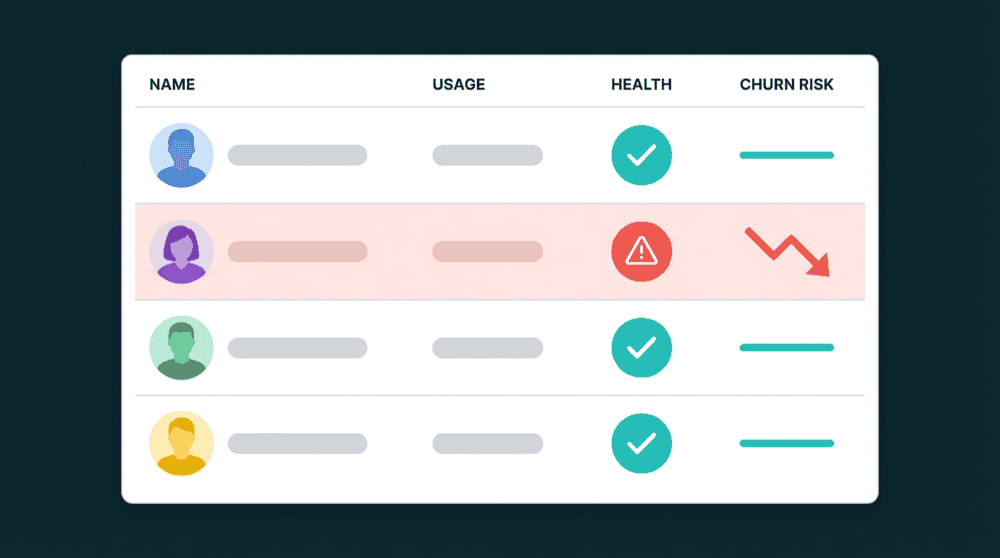
Use your CRM's native scoring to weight synced fields: +20 for active subscription, -15 for open support ticket, +10 for daily login. The score ranks customers by churn risk or expansion readiness.
Step 5
Act on signals across your stack
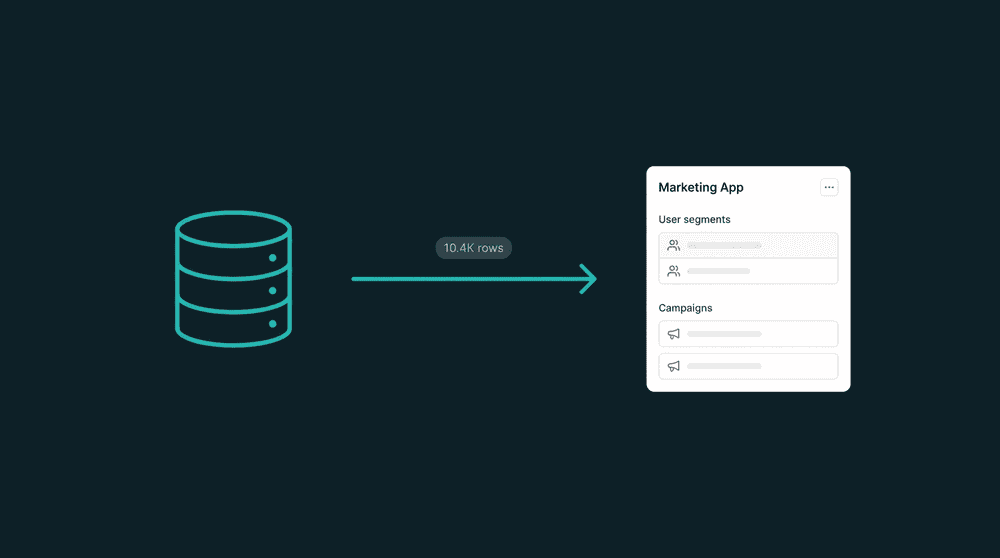
Trigger retention campaigns for high-risk scores, route expansion candidates to sales, and send re-engagement emails to dormant users. Your tools support these workflows. Now they have the data.
FAQ
What is predictive marketing?
Do I need ML models or a data scientist?
How is this different from an AI marketing platform?
Which tools work as predictive signal sources?
How quickly can I set this up?
Does this work for predictive advertising campaigns?